A trace you can use
Record stage, version, outcome and failure category. Decide which payloads are necessary for diagnosis and how they are protected and retained.
ENGINEERING / DESIGN NOTE 001
Use rules for what can be specified. Use AI for language work that benefits from interpretation. Make the boundary between preparation and action visible.
01 / REFERENCE ARCHITECTURE
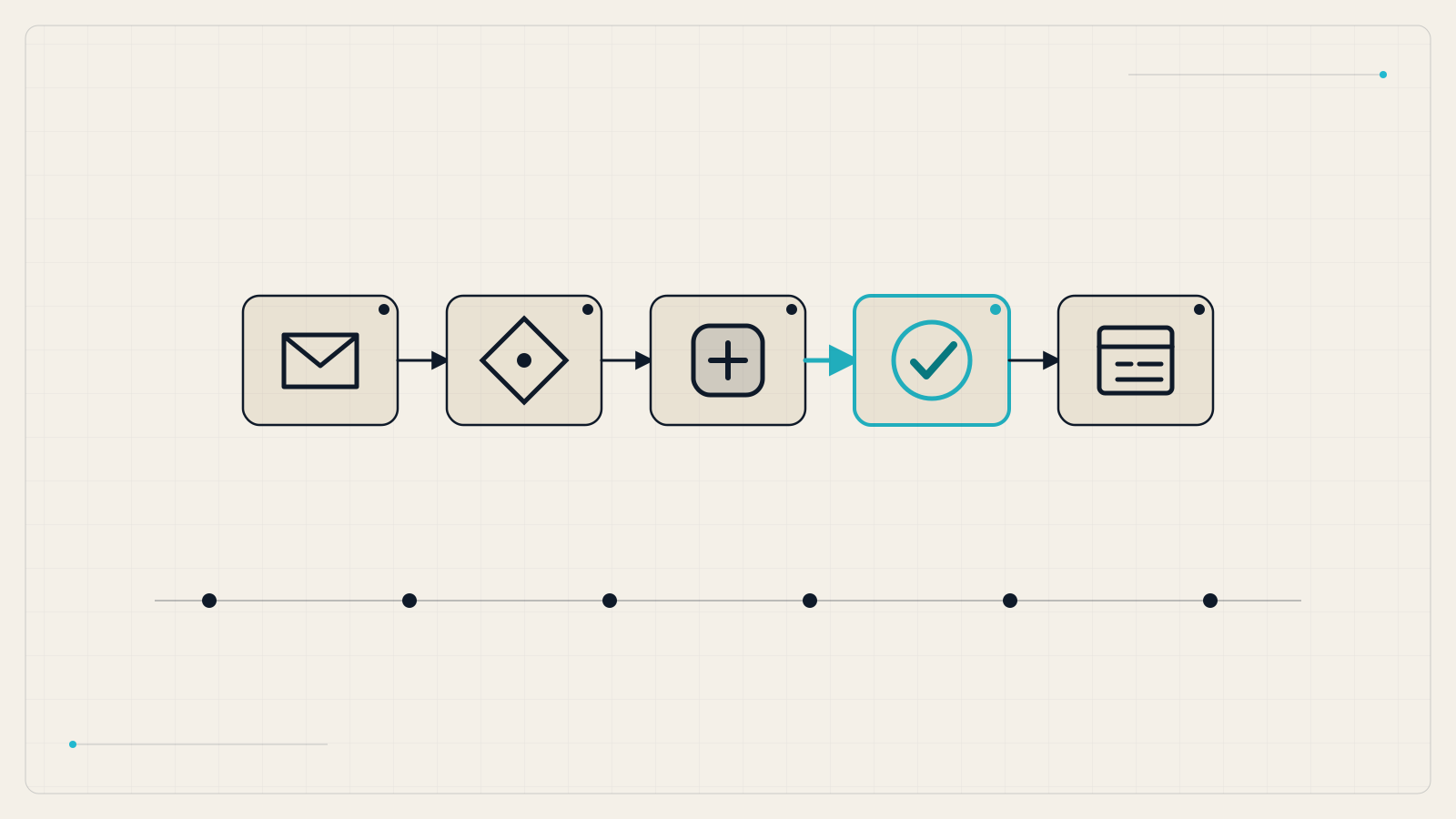
INPUT → PREPARATION → AUTHORITY → ACTION
Check required fields, allowed types and source permissions. Reject or hold incomplete work.
Use a bounded source set. Keep document versions and references attached to the result.
Extract, classify, summarise or draft where language work adds value. Do not invent missing facts.
Validate the schema and business constraints. Calculate numbers with deterministic logic.
Show what changed, the supporting evidence and the action approval will permit.
Perform only the approved action. Record the outcome and handle failure without duplicate effects.
Reference architecture for a scoped implementation. Each stage has a failure path; a missing prerequisite holds the item for its owner rather than continuing by assumption.
02 / STRUCTURED INTERFACES
Illustrative interface, not a live API. The source references, proposed output and permission to act travel separately. A model response cannot grant itself approval.
A source-linked draft can still be wrong. Validation, review and action authority remain separate steps.
{
  "request_id": "SYN-EXAMPLE-01",
  "source_refs": [
    "approved-source:v3:section-2"
  ],
  "proposed_action": "prepare_draft",
  "result_status": "needs_review",
  "approval": {
    "required": true,
    "granted": false
  },
  "external_action_allowed": false
}
03 / ACCEPTANCE CASES
The agreed output is produced and can be traced to its inputs.
Hold for review; uncertainty does not silently become approval.
Request the missing source or field and preserve the incomplete state.
Reject invalid types, values or formats before a downstream action.
Record failure and use an agreed retry or escalation path.
Refuse actions outside the permitted workflow and data scope.
Prevent a retry from repeating a consequential external action.
Re-run relevant acceptance cases before releasing the new version.
Reference cases for a customer acceptance plan. The exact tests and evidence are agreed for each implementation.
04 / OPERATIONAL DESIGN
Record stage, version, outcome and failure category. Decide which payloads are necessary for diagnosis and how they are protected and retained.
Someone must own exceptions, access changes and the decision to resume. A queue without an accountable person is not a recovery plan.
Re-test affected cases when a model, instruction, source or integration changes. Keep a previous working version and an explicit recovery procedure.
05 / EVIDENCE YOU CAN INSPECT
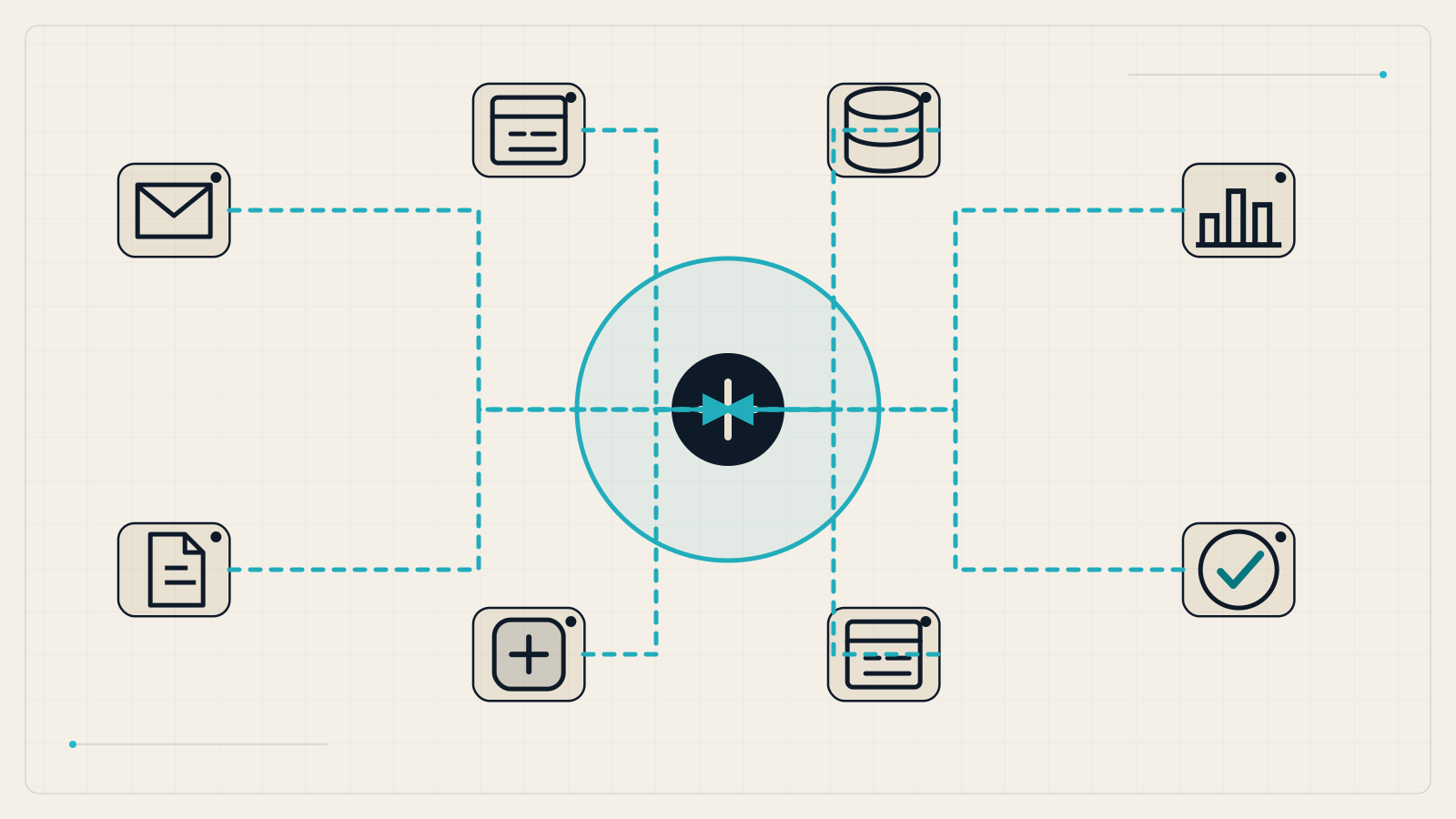
The Workflow Studio demonstrates local approval stops, resets, exceptions, structured data and event traces. Customer integrations, retries and operational monitoring require their own implementation and acceptance evidence.